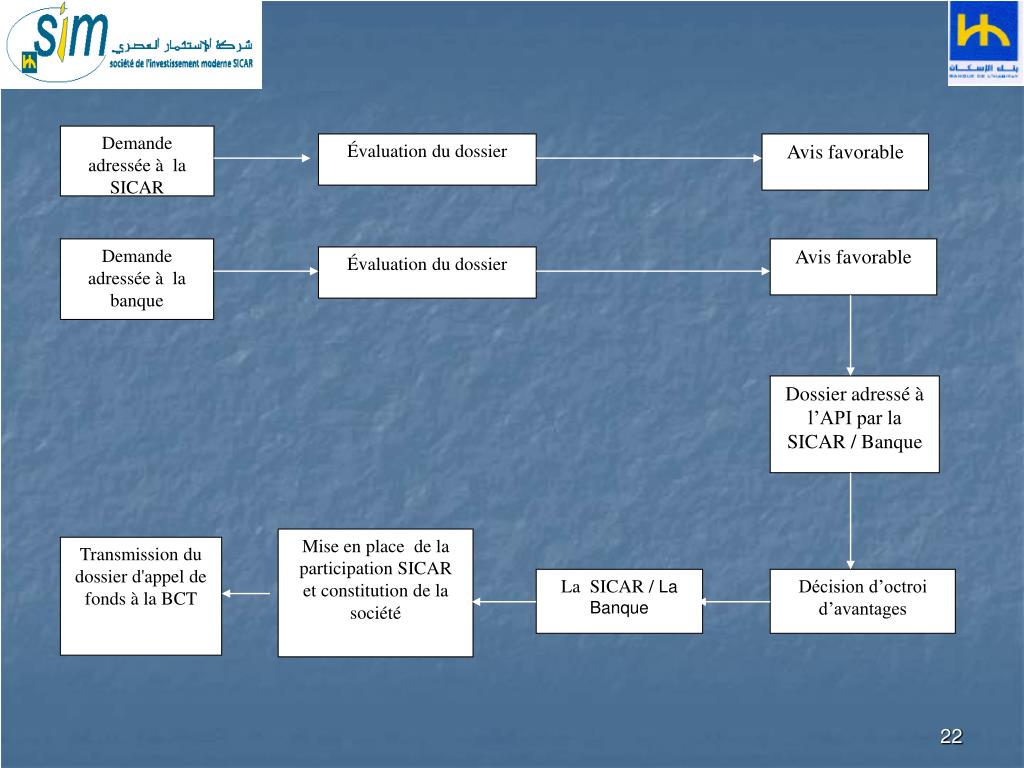
Financement SICAR Tunisie – SICAR Investment in Tunisia Sociétés d’Investissement à Capital Risque (SICARs), or Risk Capital Investment Companies, play a vital role in the Tunisian economy, particularly in supporting startups and Small and Medium Enterprises (SMEs). These companies are a crucial source of equity financing for businesses that often struggle to access traditional bank loans due to their perceived higher risk profile. The Tunisian government actively promotes SICARs as a tool for economic growth, job creation, and innovation. SICARs operate under a specific legal framework in Tunisia, primarily governed by Law No. 88-92 of August 2, 1988, as amended. This law outlines the regulatory requirements, investment parameters, and tax benefits associated with SICAR activity. The legislation is designed to encourage private investment in these funds, making them attractive to both domestic and foreign investors. The main purpose of a SICAR is to invest in the equity or quasi-equity of companies operating in Tunisia, typically those in their early stages of development or undergoing significant expansion. These investments often take the form of direct equity stakes, convertible bonds, or participating loans. SICARs provide not only capital but also valuable expertise, mentorship, and networking opportunities to the companies they invest in. This hands-on approach is critical for helping these businesses navigate the challenges of growth and achieve their full potential. The sectors targeted by SICARs in Tunisia are diverse, reflecting the country’s economic priorities. They often focus on sectors with high growth potential, such as technology, renewable energy, tourism, and agribusiness. By targeting these sectors, SICARs contribute to the diversification and modernization of the Tunisian economy. One of the key advantages of investing through a SICAR is the tax benefits offered under Tunisian law. SICARs are generally exempt from corporate income tax on profits derived from their investments. This tax advantage incentivizes private investors to allocate capital to SICARs, ultimately increasing the amount of risk capital available to Tunisian businesses. However, SICARs also face certain challenges. One challenge is the relatively small size of the Tunisian venture capital market compared to more developed economies. This can limit the exit opportunities for SICARs, making it more difficult to realize returns on their investments. Another challenge is the need for strong corporate governance and transparency to ensure that SICARs are managed effectively and ethically. The future of SICARs in Tunisia looks promising. The government continues to refine the regulatory framework and introduce new initiatives to further support the growth of the venture capital industry. These initiatives include providing incentives for angel investors and facilitating access to co-investment opportunities. The increasing number of successful Tunisian startups and SMEs is also attracting greater interest from both domestic and international investors in SICARs. In conclusion, Financement SICAR en Tunisie is a critical component of the country’s strategy for promoting economic growth and innovation. By providing equity financing, mentorship, and access to networks, SICARs play a vital role in supporting the development of Tunisian startups and SMEs. Despite certain challenges, the Tunisian government and the private sector are working together to create a more favorable environment for SICARs, ensuring their continued contribution to the country’s economic development.
 1654×2339 set sicar luxembourg finance from www.luxembourgforfinance.lu
  815×713 sicar assurance sicar assurance from www.sicar-assurance.com
  480×300 le financement par les sicar en tunisie hayet yahia prezi from prezi.com
  1200×627 cssf issues updated faq sicar chevalier sciales from www.cs-avocats.lu
  800×400 quest ce quune sicar audrey laurent from audreylaurent.lu
  300×100 nouvelle sicar en tunisie baptisee cil sicar from www.espacemanager.com
  1023×726 descargar sicar pc gratis en espanol from www.malavida.com
  1200×630 sicar na app store from apps.apple.com
  1000×1119 ricambi sicar from www.bricosergio.it
  262×234 financiniorgtn organismes de financement sicar invest from www.financini.org.tn
  709×709 financiniorgtn organismes de financement arab tunisian develoment from www.financini.org.tn
  262×234 financiniorgtn organismes de financement international sicar from www.financini.org.tn
  221×228 financiniorgtn organismes de financement attijari sicar from www.financini.org.tn
  524×160 financiniorgtn organismes de financement stb sicar from www.financini.org.tn
  180×180 financiniorgtn organismes de financement cotif sicar from www.financini.org.tn
  1936×1936 visite des projets de la sodis sicar idaraty from idaraty.tn
  298×160 sim sicar sosiete dinvestissement moderne repertoire economique from www.tunisieindex.com
  800×600 transformation amelioration de ma combinee sicar page from www.metabricoleur.com
  648×381 sicar invest filiale de la bna bank entre au capital de cho company from www.ilboursa.com
  1200×799 atlk sndok loksmborgh alkhas bk sicar ao societe dinvestissement en from www.damalion.com
  1024×768 role des sicar dans le financement des pme powerpoint from www.slideserve.com
  1728×1152 la cdc signe une convention avec les sicar regionales idaraty from idaraty.tn
  320×240 tunisie les sicar manquent de nouveaux projets financiers wmc from www.webmanagercenter.com
  1200×1800 maorg sicar le financement par le capital risque en from www.studocu.com
  680×300 une etude de la berd appelle les sicar financer economie du savoir from www.webmanagercenter.com